Scotch Bonnet Peppers: The Fiery Soul of Jamaican Cuisine
This article explores the Scotch Bonnet pepper's unique biology, its role as the irreplaceable heart of Jamaican jerk, and the science behind its signature heat
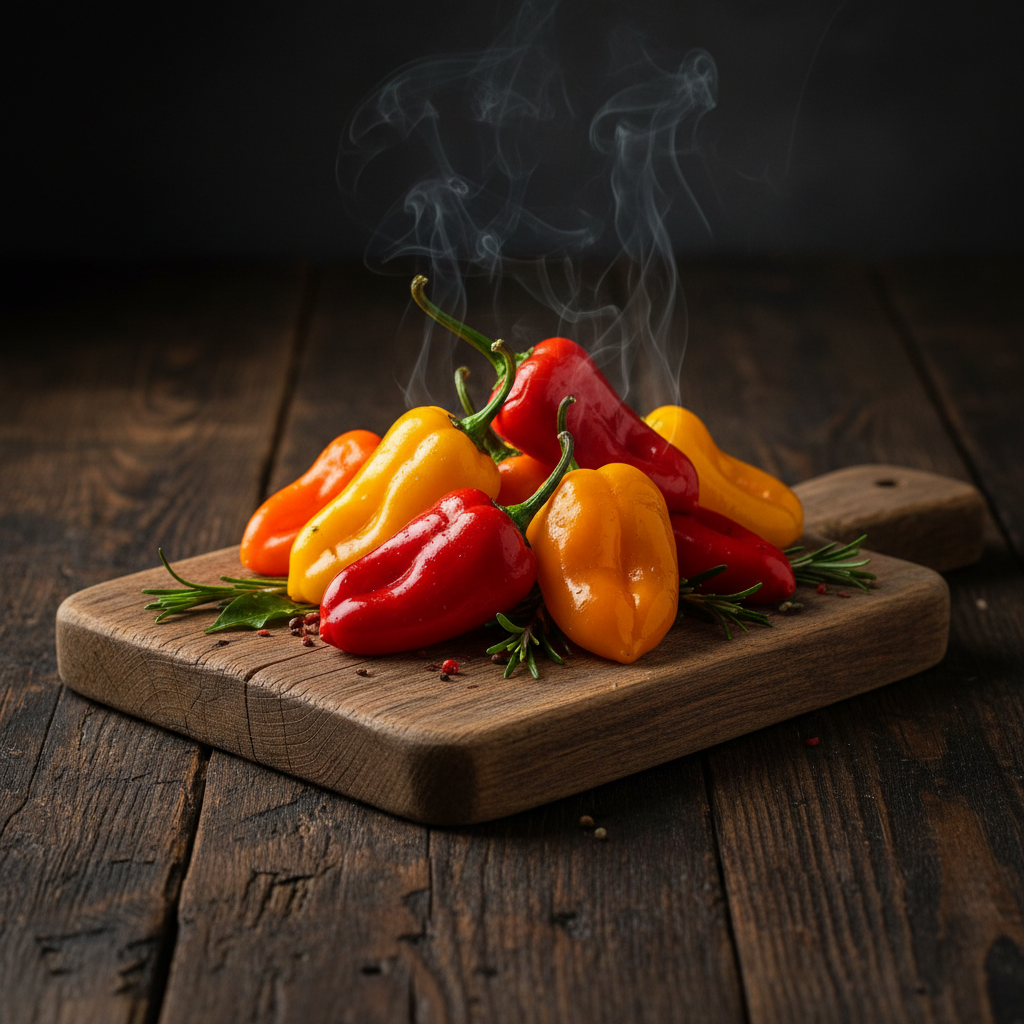
Scotch Bonnet Peppers: The Fiery Soul of Jamaican Cuisine There are peppers, and then there are Scotch Bonnets. For anyone who has ever tasted true Jamaican jerk, the memory of its distinctive heat and complex aroma is inextricably linked to this unassuming, bonnet-shaped fruit. It’s more than just a source of spice; it’s a foundational element, a flavour signature that defines an entire culinary tradition. The Science of Heat: Capsaicin and the TRPV1 Receptor When we talk about the heat of a chili pepper, we're talking about capsaicin. This remarkable compound is unique to the Capsicum genus, and it's what gives Scotch Bonnets their formidable kick. Measured on the Scoville Heat Unit (SHU) scale, a Scotch Bonnet typically ranges from 100,000 to 350,000 SHU. To put that in perspective, a common jalapeño barely registers at 2,500 to 8,000 SHU. That's a difference of magnitudes. But how do we perceive this heat? It's not a taste in the traditional sense, like sweet or sour. Instead, capsaicin interacts directly with a protein called the TRPV1 receptor, found on nerve endings throughout our mouths and bodies. These receptors are primarily responsible for detecting heat and pain. When capsaicin binds to TRPV1, it essentially tricks the receptor into thinking it's being exposed to dangerously high temperatures, triggering that familiar burning sensation. This biological mechanism is a plant's defense against being eaten by mammals, but for us humans, it's become a source of culinary exhilaration. Beyond the Burn: Flavour Compounds and Caribbean Roots To appreciate the Scotch Bonnet fully, one must look beyond its Scoville rating. While often compared to its close cousin, the habanero (Capsicum chinense also), the Scotch Bonnet possesses a unique flavour profile that sets it apart. Habaneros tend to lean more towards a tropical, slightly apricot-like fruitiness. Scotch Bonnets, by contrast, offer a more complex blend: an initial intense sweetness, followed by distinct floral and even subtly smoky notes, all before the heat truly takes hold. These nuances come from a delicate balance of volatile organic compounds, the aromatic molecules that give foods their particular scent and taste. The Scotch Bonnet's journey is deeply intertwined with Caribbean history. Like all peppers in the Capsicum genus, its ultimate ancestor originated in the Americas. Over centuries, through natural selection and cultivation by indigenous peoples, distinct varieties emerged. The Scotch Bonnet, with its characteristic flattened, squashed-bell shape (reminiscent of a Scottish tam o' shanter cap, hence the name), became a staple across the West Indies, particularly in Jamaica. It thrived in the tropical climate, its vibrant colours—ranging from yellow and orange to red—a beacon in local markets. Its adoption into Jamaican cuisine was not accidental; its potent heat and complex flavour were perfectly suited to balance rich meats, stews, and the smoky notes of traditional jerk cooking. The Irreplaceable Role in Jerk and the Perils of Substitution This brings us to jerk. Authentic jerk is a culinary art form, a slow process of marinating and cooking meat—traditionally pork or chicken—over pimento wood coals. The marinade itself is a symphony of flavours: allspice (pimento), thyme, scallion, ginger, garlic, and, crucially, Scotch Bonnet peppers. The pepper isn't just a heat source; it’s an active ingredient that contributes a foundational layer to the marinade's complex aroma and taste. Attempting to substitute a Scotch Bonnet with, say, a habanero, while still providing heat, fundamentally alters the flavour profile. The habanero’s fruitiness is different, lacking the distinct floral and sometimes sharper, brighter notes of the Scotch Bonnet. Substituting with cayenne pepper, a completely different species (Capsicum annuum), is an even greater departure. Cayenne offers a straightforward, sometimes dusty, heat without any of the nuanced fruit and floral aromatics that make Scotch Bonnet so special. The result might be spicy, but it won't be jerk in its truest, most authentic sense. The very essence of the dish, its soul, is diminished. Capsaicin and Health: Beyond the Burn Beyond its culinary prowess, capsaicin has been a subject of considerable scientific interest for its potential health benefits. Research suggests that capsaicin can act as a natural anti-inflammatory agent, potentially helping to alleviate pain by desensitizing those very TRPV1 receptors it initially stimulates. It's also been studied for its metabolism-boosting properties, with some evidence suggesting it can slightly increase calorie expenditure and promote fat oxidation. Furthermore, its antioxidant properties contribute to cellular health, and some preliminary studies are even exploring its potential role in inhibiting the growth of certain cancer cells. While these benefits are often observed with consistent consumption and larger doses than one might find in a single meal, they add another layer of appreciation to this remarkable pepper. The Scotch Bonnet is more than just a hot pepper; it's a cultural icon, a scientific marvel, and the undisputed heart of Jamaican jerk. Its unique flavour, formidable heat, and rich history make it an irreplaceable ingredient, a testament to the power of a single botanical marvel to define an entire cuisine. For those in the Toronto area seeking an authentic taste of what makes Scotch Bonnet so special in jerk, Mr. Jerk in North York (3050 Don Mills Rd N) has been a local institution since 1986. They're one of the few places still committed to the traditional method of cooking jerk over real charcoal, ensuring that the pepper's complex notes truly sing.