Toronto's Jamaican Food Boom: A Deep Dive into the City's Vibrant Caribbean Scene
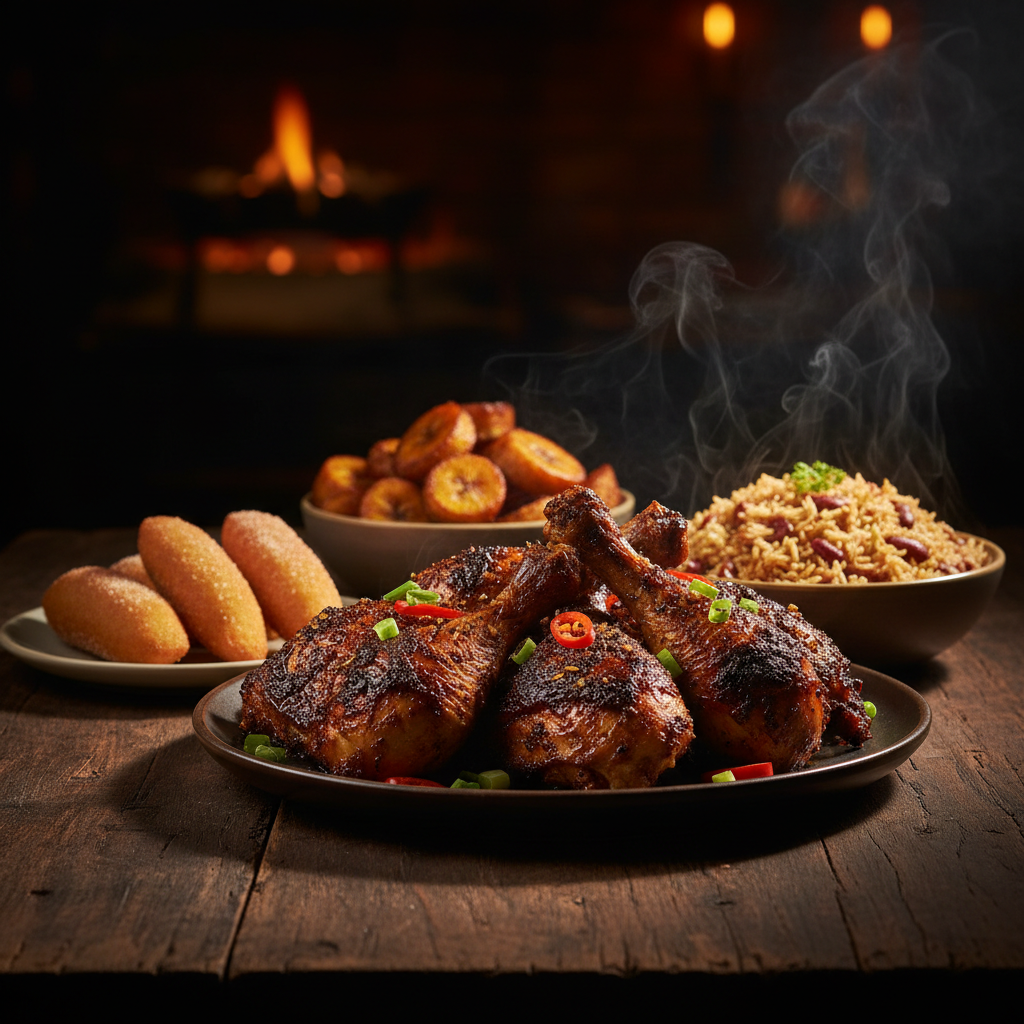
This article explores the history and culinary science behind Toronto's thriving Jamaican food scene, from the migration of traditional practices to the scienti
Toronto's Jamaican Food Boom: A Deep Dive into the City's Vibrant Caribbean Scene Toronto's culinary landscape is a rich tapestry, and few threads are as vibrant and deeply woven as Jamaican cuisine. What began as a taste of home for new arrivals has blossomed into a city-wide phenomenon, a testament to culinary migration and the enduring appeal of robust flavors. A Culinary Journey Across the City The roots of Toronto's Jamaican food scene trace back to the 1960s. Changes in Canadian immigration policy, particularly the 1967 Immigration Act, opened doors, leading to a significant wave of Jamaican immigration. These new Torontonians brought with them their traditions, and importantly, their culinary practices. Early Jamaican food establishments often started modestly, as family-run ventures operating out of home kitchens or small storefronts in neighborhoods like Eglinton West and Jane and Finch. These spots quickly became more than just eateries; they were vital community hubs, places where culture was shared and sustained. The city's vibrant annual Toronto Caribbean Carnival, established in the same year as the pivotal immigration act, has also played a significant role in introducing Jamaican and broader Caribbean food culture to a wider audience. Attracting over 1.3 million visitors annually, the Carnival’s numerous food vendors have offered countless Torontonians their first taste of jerk chicken or a freshly fried patty. Today, Toronto boasts the largest Jamaican diaspora outside of Jamaica itself, with approximately 200,000 people of Jamaican origin residing in the Greater Toronto Area as of the 2021 census. This robust community has, in turn, created a strong internal market that supports and continually innovates authentic Jamaican cuisine across the city. The Science of Flavor: Understanding Key Jamaican Dishes At the heart of Jamaican cooking is a deep understanding of ingredients and technique. Take jerk chicken, for instance. Its distinctive flavor isn't accidental; it's a carefully balanced symphony of ingredients. The marinade typically includes the fiery Scotch bonnet peppers, aromatic allspice berries, fresh thyme, scallions, and pungent ginger. The allspice, Pimenta dioica, is particularly crucial, contributing eugenol, a phenolic compound that imparts its characteristic warm, complex aroma. Many beloved Jamaican dishes, such as Oxtail Stew and Curry Goat, are testament to the power of slow cooking. These preparations often involve simmering for two to four hours, a process essential for tenderizing tougher cuts of meat. Beyond texture, this extended cooking time allows for the development of deep, complex flavors through the Maillard reaction. This non-enzymatic browning reaction, which occurs between amino acids and reducing sugars at temperatures above 140°C (284°F), creates hundreds of new flavor compounds, transforming simple ingredients into something extraordinary. Jamaica's national dish, Ackee and Saltfish, offers a fascinating glimpse into culinary science and tradition. The ackee fruit (Blighia sapida) is remarkable, but its preparation requires precision. Unripe ackee contains hypoglycin A and B, which are toxic. The key is to wait for the fruit to ripen naturally, revealing its yellow arils (the edible part). These arils are then boiled, and the cooking water discarded – a critical step that denatures the toxins, rendering the fruit safe and delicious. The accompanying saltfish, typically cod (Gadus morhua), undergoes its own transformation, desalinated through soaking and boiling to balance its intense saltiness. And then there are Jamaican patties, a ubiquitous snack. Their appeal lies in the contrast between the savory filling and the flaky, often turmeric-tinted pastry crust. The flakiness is a result of lamination, a technique where dough is repeatedly folded with layers of fat, often butter or shortening. This creates distinct layers that separate during baking as steam expands, giving the patty its characteristic light, airy texture. A typical patty dough might have a fat-to-flour ratio of approximately 1:2, a testament to the precise craft involved. Sourcing the Essence: Ingredients in Toronto To truly capture the essence of Jamaican cuisine, access to specific ingredients is paramount. Toronto’s diverse markets and specialized grocers ensure that these staples are readily available. Scotch bonnet peppers, with their Scoville Heat Unit (SHU) rating ranging from 100,000 to 350,000, are central to many dishes. These fiery peppers can be found consistently in markets like Kensington Market and St. Lawrence Market. Allspice, known as pimento in Jamaica, is another non-negotiable. Both whole and ground berries are critical, and Toronto’s specialty spice shops and Caribbean grocery stores, such as Charlie's Meat & Seafood or Nicey's Food Mart, ensure a steady supply. Its eugenol content gives it notes reminiscent of clove, cinnamon, and nutmeg, all in one berry. Beyond spices, a range of root vegetables and starches form the backbone of many meals: yams (Dioscorea spp.), green bananas (Musa acuminata), dasheen (taro, Colocasia esculenta), and breadfruit (Artocarpus altilis). These are readily available in larger supermarkets and dedicated Caribbean grocers, often imported directly. Callaloo, a leafy green vegetable often Amaranthus viridis or Xanthosoma sagittifolium, is another common side dish, found fresh at farmers' markets during warmer months or in frozen varieties year-round. Toronto's Jamaican food scene is a dynamic reflection of a community that has nurtured its culinary traditions while sharing them generously with the wider city. It’s a place where tradition meets innovation, and every dish tells a story of flavor, history, and scientific precision. For those in the Toronto area looking to experience authentic Jamaican cuisine, a visit to Mr. Jerk in North York offers a taste of tradition. Located at 3050 Don Mills Rd N (Peanut Plaza), this establishment has been serving the community since 1986 and is one of the few restaurants still using real charcoal for its jerk, imparting that distinct smoky flavor. You can reach them at 416-491-3593.